Midnattsloppet 2026 is a 10 km night race in Stockholm on August 15th, starting at 10 PM. The course has 85 meters of climbing concentrated at km 4-6. Train for 6-12 weeks depending on your level, include weekly hill intervals, and start the race 5-10 seconds per km slower than goal pace.
Stockholm's Most Magical Race
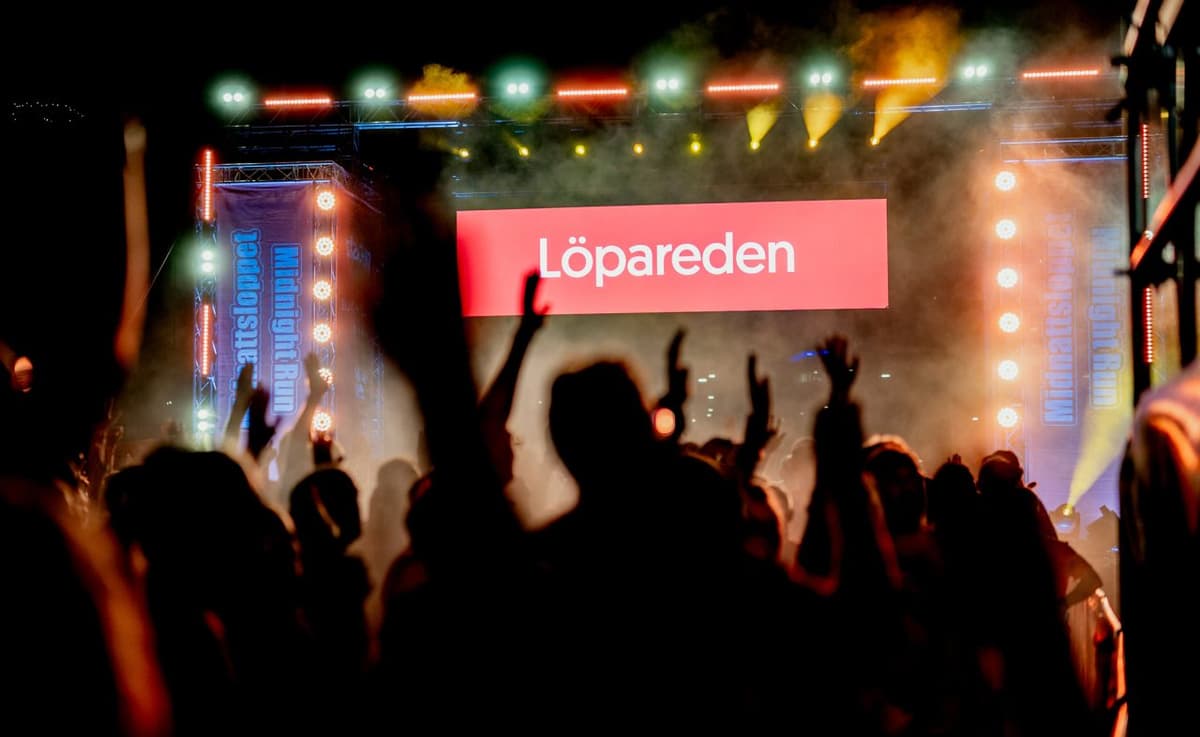
Midnattsloppet is unlike any other race. When the starting gun fires at 10 PM on an August evening in Stockholm, something special happens. Thousands of runners take to the city streets at dusk, and by the time you cross the finish line, the city lights are glowing around you.
Midnattsloppet 2026 takes place on Saturday, August 15th. At 10 km, it's a perfect goal if you want to challenge yourself without committing to half marathon training.
Start your personalized Midnattsloppet training plan now – free to begin!
Why Run Midnattsloppet?
- Unique experience – Running through Stockholm as the sun sets is magical
- Perfect distance – 10 km is challenging enough to feel like an achievement, yet manageable for most
- Amazing atmosphere – The crowd and music along the course give you energy
- Summer evening – Cooler temperatures make running more comfortable
- Community – Thousands of runners share the experience with you
The Course: What to Expect
Midnattsloppet starts and finishes at Stadion in central Stockholm. The course takes you through some of the city's most beautiful areas – but also some hills that demand respect.
Course Difficulty Kilometer by Kilometer
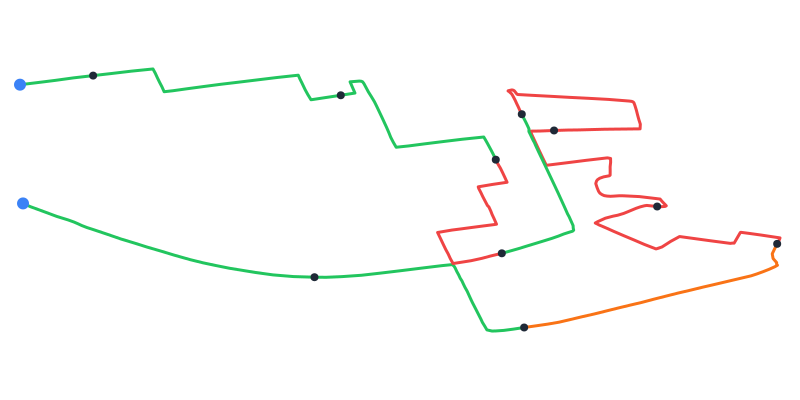
The map shows the course with each kilometer color-coded by difficulty. Green means flat and easy, yellow is moderately hilly, and red marks the tougher sections. The course has about 85 meters of total climbing – concentrated in the middle of the race.
Km 1-3: Stadion → Östermalm
The start at Stadion is wide and you'll have plenty of room to find your pace. The first three kilometers are relatively flat and take you through the Östermalm district. Enjoy the atmosphere and hold back.
Km 4-6: The Hills
Here comes the toughest part of the race. Three kilometers of hilly terrain where you climb approximately 55 meters in total. This is where many runners go out too hard and pay the price later.
The hills at km 4-6 will define your race. If you've saved energy in the early kilometers, you'll handle them significantly better than those who started too fast.
Km 7: The Downhill
Now you're rewarded for the climbing. Kilometer 7 is mostly downhill – use it to recover before the final push.
Km 8: Last Climb
One final short hill before it flattens out. Be mentally prepared – you're almost there.
Km 9-10: Sprint to Stadion
The last two kilometers are flat and fast. Now it's time to give everything you have left. The finish at Stadion with the crowd around you is unforgettable.
Training Plan: How Much Time Do You Need?
| Your Current Level | Recommended Time | Start Date for August 15 |
|---|---|---|
| Beginner (can jog 20 min) | 10-12 weeks | Early June |
| Can run 3-5 km | 8-10 weeks | Mid-June |
| Can run 5-7 km | 6-8 weeks | Late June |
| Experienced (have run 10 km) | 4-6 weeks | July |
Training Structure for Midnattsloppet
Phase 1: Base Building (weeks 1-4)
Focus on building a solid foundation:
- 3-4 running sessions per week
- All sessions at easy pace (you should be able to talk)
- Gradual increase in distance
- One longer run per week (building from 5 to 7 km)
Phase 2: Development (weeks 5-8)
Now we increase both distance and intensity:
- Introduce one interval session per week
- Tempo runs at 10K pace
- Longest run increases to 8-10 km
- Continued focus on easy base runs
Sample Week in Development Phase
| Day | Workout | Purpose |
|---|---|---|
| Monday | Rest | Recovery |
| Tuesday | Intervals: 8 x 400m | VO2max |
| Wednesday | Easy run 30 min | Aerobic base |
| Thursday | Rest or strength training | Recovery |
| Friday | Tempo run 20 min | Race pace |
| Saturday | Longer run 8 km | Endurance |
| Sunday | Rest or walk | Recovery |
Phase 3: Taper (weeks 9-10)
Final phase before the race:
- Gradually reduce volume
- Maintain some intensity with shorter intervals
- Focus on recovery and sleep
- Last longer run (8-10 km) ten days before
- Last hard session one week before
Specific Training for Midnattsloppet
Hill Training
With 85 meters of climbing concentrated in the middle of the course, you need to be prepared. Here's how:
- Include hill intervals once a week
- Run on hilly terrain when possible
- Practice uphill running form (shorter steps, active arms, eyes forward)
Pacing Strategy
A typical pace chart for different 10K finish times:
| Target Time | Pace/km | Pace/mile |
|---|---|---|
| 45:00 | 4:30 | 7:15 |
| 50:00 | 5:00 | 8:03 |
| 55:00 | 5:30 | 8:51 |
| 60:00 | 6:00 | 9:39 |
Plan to run the first 3 km about 5-10 seconds per kilometer slower than your goal pace. Save your energy for the hills – you'll need it.
The Week Before Midnattsloppet
Monday-Wednesday
- Short, easy runs (15-25 min)
- Focus on keeping legs fresh without tiring them
Thursday
- Complete rest or very easy walk
- Prepare all equipment
Friday
- Pick up race number
- Optional short 10-minute jog
- Lay out clothes and shoes
Saturday (race day)
- Eat lunch as normal, avoid heavy food
- Light snack 2-3 hours before start
- Arrive at Stadion early (at least 1 hour before)
- Warm up 15-20 minutes before start
Since the race starts at 10 PM, you'll need to adjust your day. Rest in the afternoon if you can, and have a light snack around 7 PM.
Equipment for Midnattsloppet
Shoes
Use broken-in shoes you've trained in. Never new shoes on race day!
Clothing (August in Stockholm)
August evenings can be pleasant or cool:
- Plan for 15-22°C (60-72°F) at start
- Light, moisture-wicking clothes
- Shorts and singlet usually suffice
- Bring a light jacket to warm up in (leave in gear check)
Reflectors and Headlamp
Midnattsloppet runs through dusk and darkness:
- The organizer usually provides reflectors
- A headlamp isn't necessary but can be fun
- Light-colored clothing is more visible
Nutrition
- Eat normally during the day
- Light snack 2-3 hours before: banana, energy bar, or sandwich
- During the race: water at aid stations is enough for most runners at 10 km
Train for Midnattsloppet with VRAPIDA
With VRAPIDA, you get a training plan specifically tailored for Midnattsloppet 2026:
- Select Midnattsloppet as your goal
- Enter your current level and available training days
- Get your first workout – instantly adapted for your journey to August 15
- Train and give feedback – the plan adapts to how you feel
Why VRAPIDA for Midnattsloppet?
- Right structure – The plan accounts for the race date and builds you up optimally
- Adaptive training – Life happens, and the plan adjusts to you
- One workout at a time – Focus on the next session, not an entire schedule
- Hill training – We include hilly workouts to prepare for Midnattsloppet's climbs
Already signed up for Midnattsloppet 2026? Start your training here – it's free to begin.
Summary
Midnattsloppet is an experience like no other. Running through Stockholm on an August night, surrounded by thousands of other runners and cheering crowds, is something you won't soon forget.
Remember:
- Start training in time (at least 8 weeks)
- Respect the hills at km 4-6 – train for them
- Hold back at the start
- Enjoy the evening and the atmosphere
See you at Stadion on August 15, 2026!